


I held UST because the yield was too good to leave alone.
A digital dollar — a stablecoin — paying almost 20% to just sit there. For a while it felt like I'd found a door most people walked past.
Then, in May 2022, it came apart. UST slipped off its dollar and didn't climb back, and the further it slipped the faster it fell.
I wasn't checking reserves. The only question I had was *how do I get out, right now.* I swapped into USDT — not because I'd decided it was safer, but because it was the quickest way out of UST. When the thing is on fire, you don't audit the door. You take it.
The question that mattered — *what is behind this dollar?* — I didn't get to until it was already too late to ask.
Three years later, Congress tried to make that question impossible to skip.
The Guiding and Establishing National Innovation for US Stablecoins Act—the GENIUS Act—was signed into law on July 18, 2025. Seven months later, the effects are becoming visible in Treasury markets, international dollar flows, and the infrastructure that determines which currency the world actually uses.
The mechanics of stablecoins now directly influence US government borrowing costs. When borrowing costs change, everything downstream adjusts—slowly, but definitively.
What Changed on Paper
Before the GENIUS Act, stablecoins existed in a regulatory gray zone. These are digital tokens designed to maintain a 1:1 value with the US dollar—unlike Bitcoin or Ethereum, which swing in price. Companies like Circle (USDC) and Tether (USDT) issued them, and people used them to move money between exchanges, send remittances, or hold digital dollars without volatility.
The issue was straightforward: no federal framework governed issuer standards. Some backed their coins fully. Others didn’t. Disclosure practices varied widely. When failures occurred, recourse was limited.
The GENIUS Act established federal rules. Now, anyone issuing a “payment stablecoin” in the United States must:
- Back each stablecoin 1:1 with US dollars, short-term Treasury bills (under 93 days), or other approved low-risk assets
- Disclose reserve composition monthly
- Submit to regular audits
- Obtain approval as a permitted issuer
- Comply with AML and sanctions requirements
- Prioritize stablecoin holder claims if the issuer fails
The law rolls out over 18 months. By January 2027, non-compliant stablecoins cannot operate in the US.
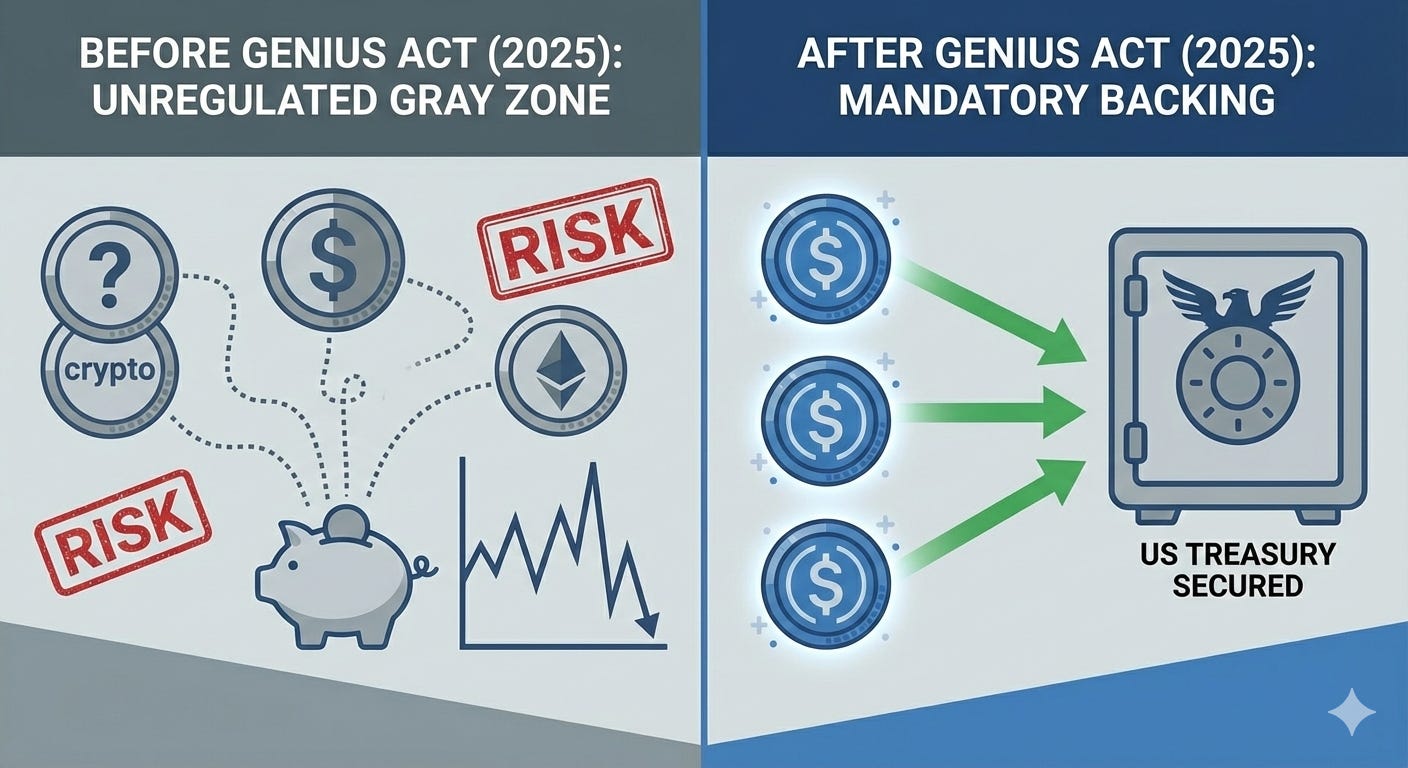
Figure 1: The Regulatory Shift
The consequence is structural: every compliant stablecoin dollar must sit in US Treasuries or cash reserves.
Issuers hold over $200 billion in assets as of early 2026. Projections show compliant issuers could hold over $1 trillion in Treasuries by 2030.
For comparison, total outstanding Treasury bills sit under $7 trillion. At scale, stablecoin issuers become material holders of short-term US government debt.
How This Changes Government Borrowing
More buyers of US Treasuries allow the government to borrow at lower rates. Scale determines impact.
Stablecoins solve access to dollar-denominated value for international users who previously faced friction. Anyone with internet access can now hold digital dollars backed by Treasuries.
This creates structural demand. Issuers must hold Treasuries. As stablecoin usage expands, Treasury demand expands with it.
Lower borrowing costs reduce interest expenses. With national debt exceeding $36 trillion, even small yield compression alters fiscal math.
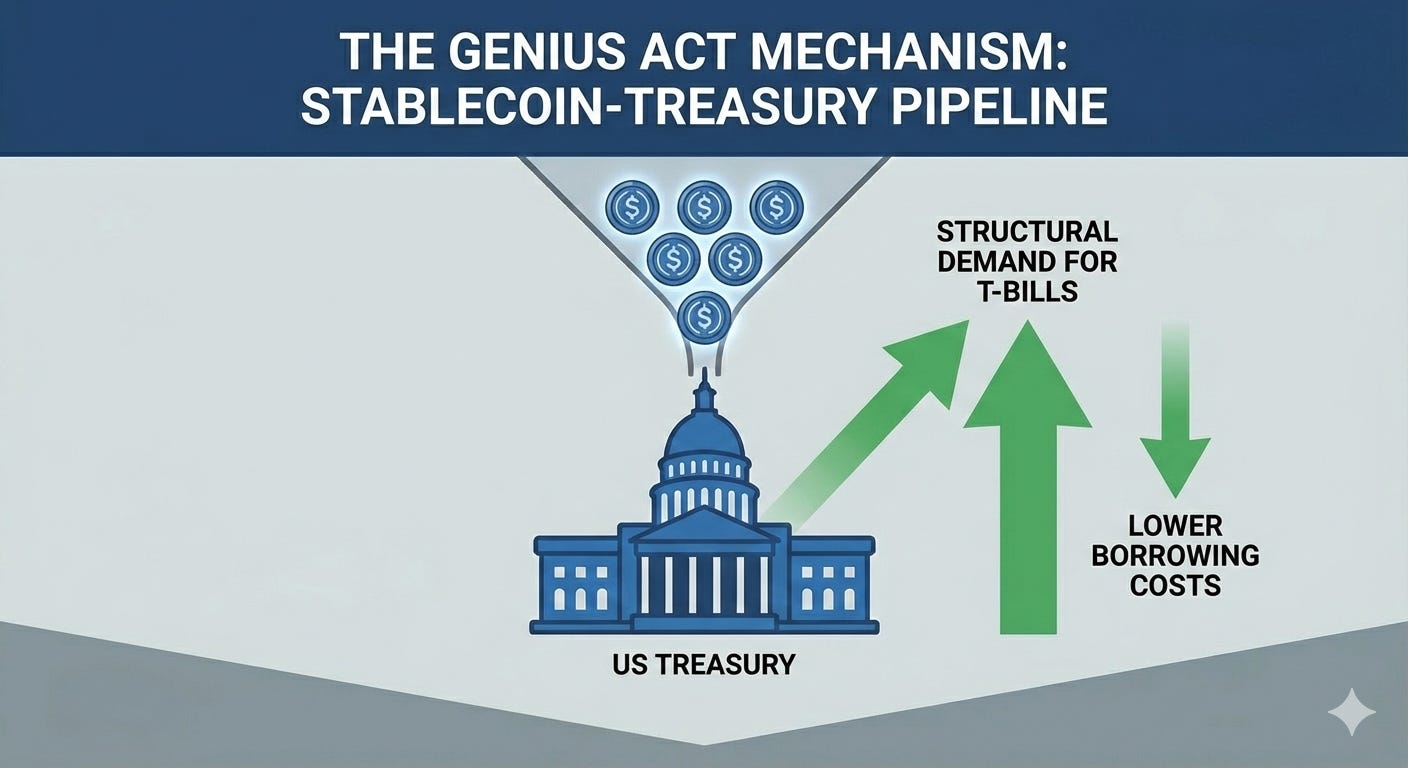
Figure 2: The Stablecoin-Treasury Pipeline
There is a counter-risk. If a stablecoin run forces rapid redemptions, issuers would need to sell Treasuries quickly. Large-scale liquidation could push yields higher. And the pressure isn't symmetric: a forced sale moves yields faster than steady buying ever brought them down. A contraction in a trillion-dollar market would not be neutral.
The GENIUS Act mitigates fraud and opacity risk through reserve requirements and audits. It does not eliminate market-wide liquidity risk. It reorganizes it.
What This Means for Everyday Americans
Stablecoins are increasingly integrating into payment infrastructure.
They settle faster than traditional transfers and reduce cross-border costs. Remittances, payroll experimentation, and global contractor payments are early integration points.

Figure 3: Digital Dollars in Motion.
The Act increases transparency and establishes holder priority claims on reserves. Stablecoins, however, are not FDIC-insured and do not carry bank deposit guarantees.
Issuers are prohibited from paying interest, preventing direct competition with bank deposits. Stablecoins function as payment rails, not savings vehicles.
For users, the primary risks remain structural rather than regulatory: custody loss, operational failure, or temporary de-pegging during market stress.
The benefit is flexibility—faster settlement, broader dollar access, and lower friction in international transfers.
The Dollar’s Position in a Fragmenting System
Dollar-backed stablecoins extend dollarization without requiring US banks or Federal Reserve infrastructure.
When individuals in countries with currency instability adopt dollar stablecoins, they increase global demand for dollar assets. Treasury backing makes that demand directly supportive of US debt markets.
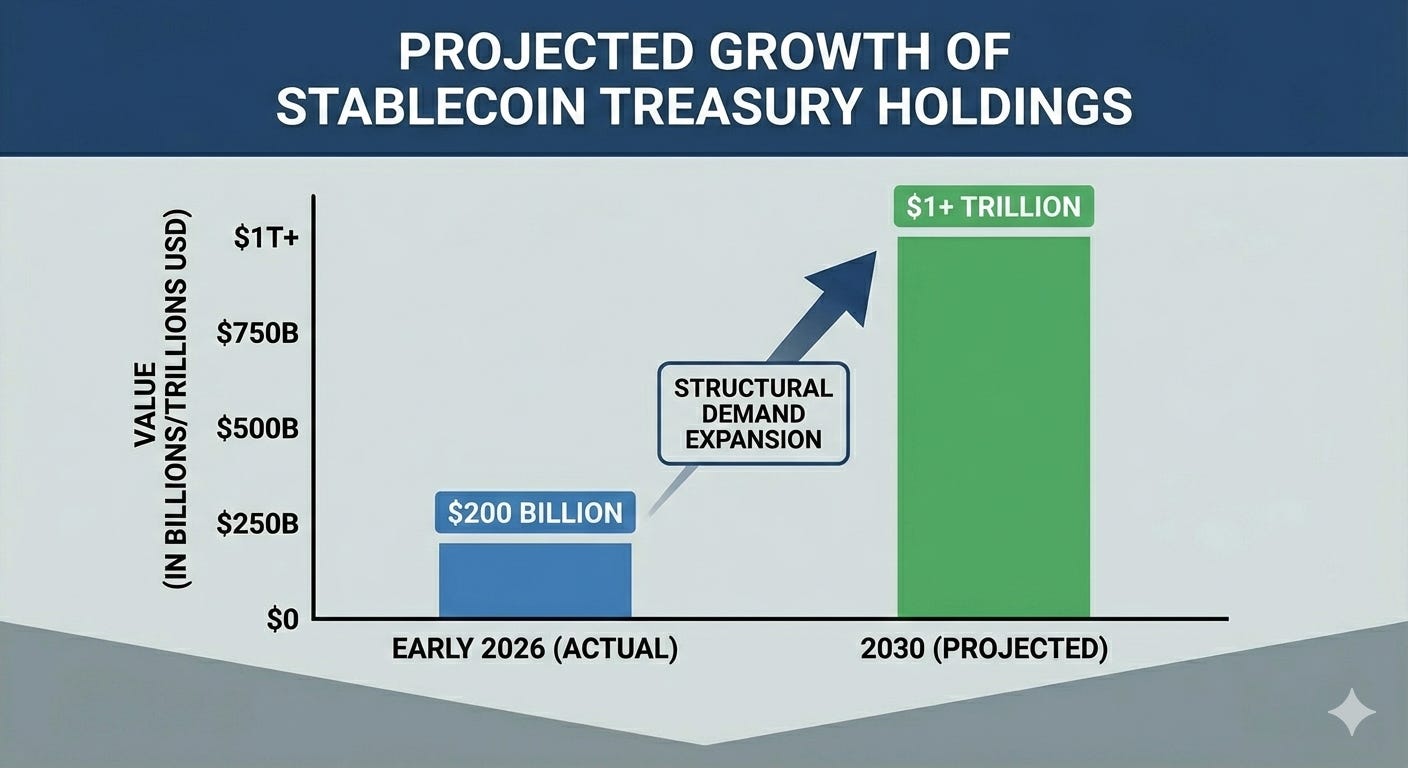
Figure 4: Projected Growth of Treasury Holdings
This dynamic strengthens dollar infrastructure in digital finance before competing systems fully mature.
Other jurisdictions are pursuing their own digital currency strategies. As financial infrastructure digitizes, currency dominance increasingly depends on integration into payment networks rather than solely on reserve holdings.
If dollar stablecoins become the default settlement layer for digital commerce, US monetary policy continues transmitting globally—even when mediated by blockchain infrastructure.
The risk lies in concentration. If stablecoin issuance consolidates among a few large entities, those entities become systemically important nodes in global dollar liquidity.
Why This Matters Now
The GENIUS Act remains in phased implementation. Full rulemaking continues into 2026.
Yet the structural effects are already forming. Banks are exploring issuance pathways. Payment providers are integrating stablecoin rails. Treasury demand tied to digital dollar growth is no longer theoretical.
The shift is not explosive. It is cumulative.
Stablecoin growth now maps directly to Treasury demand. Treasury demand influences borrowing costs. Borrowing costs influence fiscal sustainability and global dollar positioning.
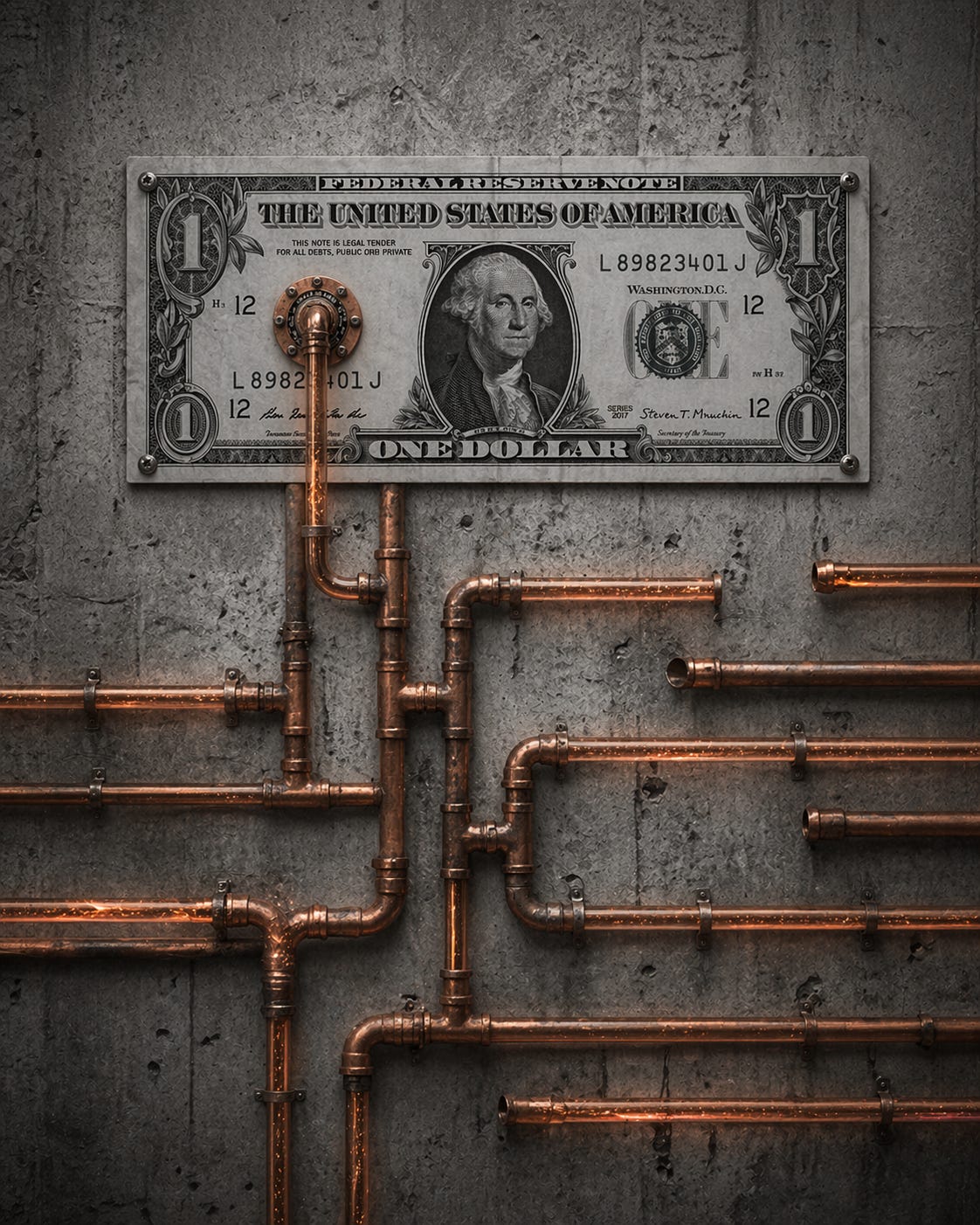
This is a plumbing change, not a headline event.
The GENIUS Act made stablecoins legible to regulation. Whether that legibility produces durable stability or reveals embedded fragilities will depend on how the system behaves under stress.
For now, the mechanism is clear:
Digital dollars now fund US government debt by design.
And that design quietly reshapes how the dollar functions in a digitizing financial system.
The architecture is in place. Whether it strengthens the dollar or just reorganizes the fragility is the thing stress will decide, not me.
But something did change for someone like me — someone who once swapped out of a burning "dollar" with no time to ask what held it up. The question I couldn't ask in the moment is now one the law drags into the open: monthly disclosure, audits, reserves you can look at. The backing isn't something you find out about during the fire anymore. It's something you can check while everything's calm.
So that's the exit, if there's one to name: not a coin to buy, but a question to ask early. Before you hold a digital dollar, ask what's actually behind it. For the first time, the answer is supposed to be on the page.
If you want to follow this path as it develops — I'll write what I see.
Subscribe below.
Very interested to see the data on stablecoin adoption in the coming years. Smart move to approve them and provide relief for short term bills!